
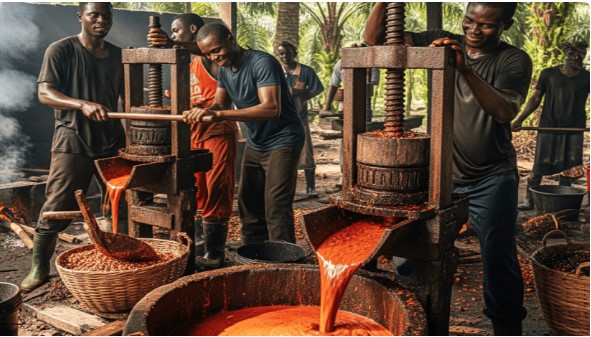
From Fruit to Fuel: The Journey of Palm Oil
Palm oil is a versatile and widely used vegetable oil derived from the fruit of the oil palm tree, especially Elaeis guineensis, native to West Africa.
Here’s a detailed overview of palm oil, its uses, and its global significance:
🌴 What Is Palm Oil?
- Source: Extracted from the reddish pulp (mesocarp) of the fruit of the oil palm tree.
- Types:
- Crude palm oil (CPO): From the fruit’s flesh.
- Palm kernel oil: From the seed or kernel inside the fruit.
- Color and Texture: Crude palm oil is naturally reddish due to high beta-carotene content and is semi-solid at room temperature.
🍽️ Common Uses of Palm Oil
- Food Industry:
- Found in margarine, baked goods, instant noodles, ice cream, and snacks.
- Used for deep frying due to its high oxidative stability.
- Cosmetics and Personal Care:
- Used in soaps, shampoos, lotions, and lipsticks for its smooth texture and moisturizing properties.
- Biofuel:
- Processed into biodiesel, especially in countries like Indonesia and Malaysia.
- Industrial Applications:
- Used in lubricants, candles, and detergents.
🌍 Global Importance
- Production: Palm oil accounts for over one-third of global vegetable oil production.
- Top Producers: Indonesia and Malaysia dominate the global market.
- Consumption: In 2015, the global average consumption was 7.7 kg per person.
⚠️ Environmental and Social Concerns
- Deforestation: Expansion of palm oil plantations has led to significant loss of tropical rainforests, especially in Southeast Asia.
- Biodiversity Threats: Habitats of endangered species like orangutans and tigers are at risk.
- Human Rights Issues: Reports of labor exploitation and land conflicts in some producing regions.
✅ Sustainable Palm Oil
- RSPO Certification: The Roundtable on Sustainable Palm Oil promotes environmentally and socially responsible practices.
- Consumer Awareness: Growing demand for ethically sourced palm oil is influencing industry practices.
